
My Tour Divide Fears (and How I’m Tackling Them)
Saddles, shivers, snacks, and staying alive in bear country.

A few weeks back, I was out on a training ride with a group of Tour Divide veterans north of Toronto. Mid-ride, Sarah Caylor asked me what my biggest fear is heading into this year’s race. I’m pretty neurotic about this ride, so I had an answer ready, but her question stuck with me. Over the next few days, I found myself revisiting the things that are nagging at me and thinking about what I’ve been doing to manage them.
So here it is – a glimpse into my fragile psyche and what I’m doing to keep it (mostly) intact ahead of the Grand Depart.
1. Saddle Sores: My #1 Fear
Top of the list, by far: saddle sores.
I first dealt with them on a tour a decade ago, and while they’ve never become a full-blown crisis since, they’ve definitely flared up enough to make me cautious. If you’re unfamiliar with just how bad they can get, feel free to Google it – I’ll wait…
Still with me? Great. If left unchecked, saddle sores can be serious – painful enough to make riding impossible, and bad enough to be race-ending.
What I’ve done:
Swapped out my saddle last fall for a Brooks C17 before a 1,000 km tour around Georgian Bay. It was... fine. Not great.
Tried another one this spring. Better, but still no magic – after a few days of riding, I was shifting around a lot. No sores; just sore.
Tested a third saddle recently, but then got injured (unrelated to the saddle), which meant I didn’t get to put it through its paces.
Long story short: I’m not sure I’ve fully addressed this one, which is why it’s my #1 concern. I’m not using something that’s not fully tested, so I’ll be starting the Divide with a saddle I’m about 75% happy with. Less than ideal, but here we are.
2. Cold: My nemesis
I have bad circulation in my fingers and toes. They both turn white quickly when the temperature drops, and my feet have turned numerous other colours at times after chilly training rides. I had a scary moment in March when the temperature plummeted to -15C while I was half-way into a 120km ride, and I haven’t been able to feel the end of my big toe on either foot since that ride.
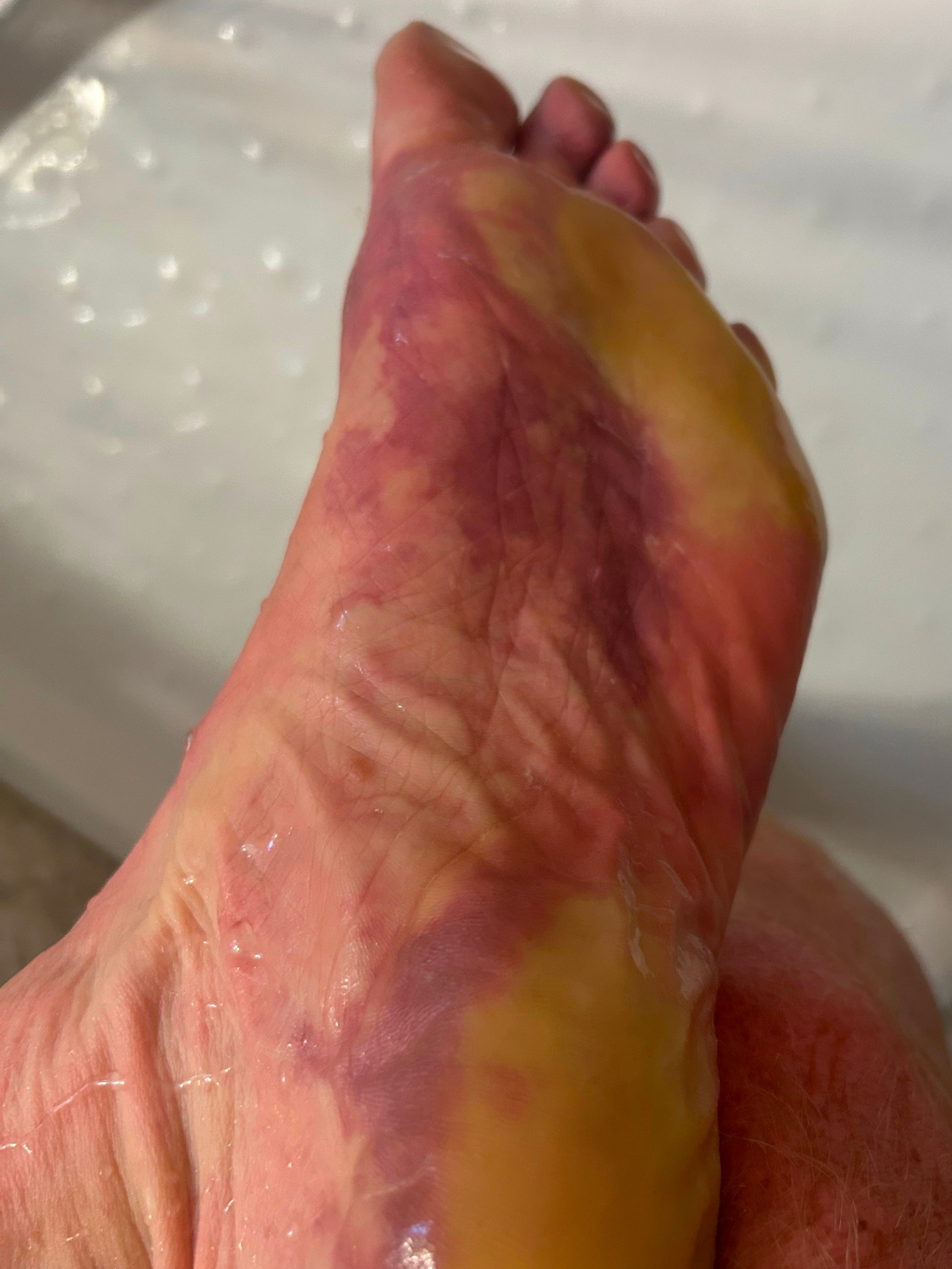
Needless to say, with the unpredictable weather in the Rockies, this has been top-of-mind for me. If I’ve “packed my fears” in one area, it’s this. Happily, as I’ve upgraded my gear, its size and weight has fallen.
What I’ve done:
Layered up - I have multiple layers for pretty much every part of my body, which will let me layer up or down gradually when needed. Aside from my face, I have a minimum of three layers for any given part of me.
Plastic bags (!) - Following some frequent advice from Tour veterans, I’m packing plastic bags as a last line of defense to keep my feet dry when the rain pours - and medical gloves for my hands (also handy in case of keeping oil off my hands if needing to do repairs on the road)
Plan for the wet - I’ve invested in quality, breathable outerwear from head to toe (since my post on my gear, I’ve upgraded my rain jacket to a breathable Gore-Tex CoPilot jacket), including overshoes for my feet and waterproof gloves
Emergency blanket - If the worst comes to the worst and I find myself in trouble, I have an emergency foil blanket to bundle up in until help (or warmer weather) arrives.
SOS - As a last resort, my Garmin InReach tracker has an SOS button that will put me in touch with search & rescue services if I need to get bailed out.
3. Food and Water: Because I’m Not a Camel
I joked in my last post about trying to plan out of existence my fear of running out of food and water. But really, it’s no joke. In the past I’ve had a bad habit of under-fueling on long rides, and I sweat a lot. Combine those two, and you’ve got a recipe for bonking – or worse – especially in the remote stretches of the Divide where temperatures can top 40C (104F) and there’s no one to bail you out.
What I’ve done:
Doubled my water capacity – I can now carry around 8L thanks to a hydration vest, two frame bottles, and a 3L bladder in my frame bag.
Mapped resupply points – I’ve researched every town and stop, including store hours, and plugged them into my data sheet.
Set up reminders – My Garmin now nags me to drink every 10 minutes, and to eat every 20 minutes.
Packed purification gear – Standard filter and purification tablets so I can safely refill from rivers, streams, or questionable taps along the route.
4. Bears: Low Probability; High Impact
Honestly, this one isn’t keeping me up at night (yet). But out on the trail, that could change fast. The fear here is more about scenarios:
Rounding a bend and surprising a momma grizzly.
Crawling into my tent and unintentionally turning myself into a human burrito.
Statistically unlikely? Sure. But if it goes wrong, it really goes wrong.
What I’ve done:
As with the food and drink concern, I’ve managed this one proactively:
Brushed up on bear safety – Revisited best practices for prevention and response.
Audible warning system – Initially bought a Bluetooth speaker to make some noise, but swapped it out for a lighter, shriller whistle (less fun, more functional).
Bear bag setup – Picked up a hanging kit to store food away from camp.
Bear spray – Ordered ahead to Banff (thanks for the tip, Rob Givens!).
This isn’t a comprehensive list—there’s always more to worry about—but these are the big ones. Every long ride is a puzzle of logistics, gear, and mental resilience. The Tour Divide just turns up the volume on all of that. But prepping for the challenges is part of the fun… right?
I did a solo gravel ride deep in Gatineau Parc last spring. I came across two different sets of black bears with cubs. My 30 second power was off the charts as was the weird scream/screech that bellowed from my lungs.